And furthermore ...

One Man's Treasure encourages the use of anonymous photographs posted here to illustrate books and album covers.
If an image appeals to you, contact John Toohey at johntoohey@hotmail.com.
Showing posts with label Movies. Show all posts

Tuesday, 21 October 2014

WINGS OF DESIRE


Transgressive images from Weimar cinema
 "I’m sincere in my preference for men’s clothes. I do not wear them to be sensational. I think I am much more alluring in these clothes."
Marlene Dietrich


 Berlin in the Weimar years: a city rampant with leather wrapped, cross-dressing S&M fetishists, or not. Depending on whom you ask (or what you read), that image is either an invention or a conflation. There were bars like the Silhouette, where a customer could take a table and watch a parade of men in make-up and dresses and women in tuxedos, but reliable advice suggests most of the night spots were a lot tamer than that. Apparently we can thank films like The Night Porter and Cabaret for seizing on a rumour and treating it as fact. If the Nazis were perverts by definition, it was assumed that for night time amusements they’d prefer watching a couple of transvestites spanking each other rather than a blonde fraulein singing banal operetta, but when you think it through, the latter is darker, stranger and altogether more disturbing. One of the hallmarks of the Nazi leadership was an abject lack of imagination. These were people who dreamed of a world where everyone shared their passion for kitsch, which meant blonde girls in gingham singing folk songs, not sexual ambiguity. Goodbye to Berlin, Christopher Isherwood’s original book on which Cabaret was based has no scenes set in a cabaret, but can we really blame Michael York and Dirk Bogarde for helping create the enduring image of Berlin C1930? Not entirely. Thanks to the Ross Verlag postcards we have thousands of surviving images that show the photo studios pushed the idea of a city where taboos were broken as a daily habit. Yet, coming from the cinema world, they were images of what the world could be, not what it was. Lya de Putti’s attire may have looked fabulous but it was impractical, and it was easier to imagine a world where women strolled along the Kurfürstendamm in sheer, glistening black rather than live in one where they actually did. After all, for a lot of ordinary citizens struggling with hyperinflation and massive unemployment, to dress like Ms Putti does in this photo was like waving a red flag at a National Socialist rally. The photograph is by M. I. Boris, aka the Bulgarian Boris Majdrakoff, who arrived in New York in the 1920s with a past respectable thriller writers would have dismissed as too unlikely. 

 
 Look at contemporary fashion images of women wearing suits and ties and we are meant to think of them as daring experiments in gender reversal, but so many of the Ross postcards show women wearing men’s clothing, or a close approximation, that we realize they were a trend back in 1920s and ‘30s Berlin. What makes us think they are about playing a game rather than making a statement is that so many of the actresses portrayed did not have reputations for challenging convention. From what we know of Carola Tölle, she played solid roles in films that are largely forgotten because there is no compelling reason to remember them. Her private life can’t be accounted for but it appears scandal free.

 
 Henny Porten’s fame and reputation have endured, for her roles as a gentle or long suffering earth mother type. Comparing the photo of her with that of Ms Tölle, we begin to see a pattern, or rather, a style. Only a decade earlier the notion of a woman wearing a suit and tie would have still caused a stir. In 1919 however, German women won the right to vote.  What had changed had less to do with Weimar Berlin’s free thinking than fashion designers’ understanding of how to accommodate radical into chic. Ms Porten’s sleeveless waistcoat has a decidedly feminine cut. She is not wearing a business suit. In the 1970s Diane Keaton revived the suited look in Annie Hall. If it didn’t make the jump to the pages of Vogue that was because it was too idiosyncratic: it was one thing to look like Diane Keaton, another to look like Annie Hall. And maybe the crusty old editors at the magazines took one glance, recalled their youth in Vienna wearing Papa’s silk ties and thought it had all been done before.

 
 Having never seen Marcella Albani in a film, commenting on her strengths as an actress is pointless, but in every other photograph of her in the collection she is portrayed as the embodiment of graceful elegance; a woman with a preference for haut couture and intelligent conversation. That doesn’t mean she lacked a sense of humour. When she fronted up to the studio on this particular day, she might well have been bored with the idea of yet another soft focus study suggesting she had just emanated from the mists. Perhaps Herr Binder was bored too and together they concocted an image the very opposite of what was expected. She was an actress; it was her job to be out of character. 

 
 Russian born Hella Moja dressed as a baroque era noble (or Mozart) looks to be having the last word on androgyny here, and in a way she is. We know from photographs by Walery and Reutlinger that the Ancien Regime look was popular around the Parisian music halls a generation before Karl Schenker took this portrait. So too were the matador, the Gypsy and even the blacksmith. They were too exaggerated to be subversive, more like fancy dress, and never began with the premise that other women might want to dress that way in the street. Also, it was always more acceptable for women to dress as men than the other way around. How many of the leading male stars were willing to don corsets and bustles?

 
 Sigmund Freud’s nephew Edward Bernays famously turned up in the U.S and turned women on to smoking. He took his lead from home, where the habit was already associated with modern sophistication, added a bit of volume and general crassness and earned the undying gratitude of his employers. A lot of the Ross postcards show women smoking; by the mid 1920s a cigarette in the hand was a sign of elegance, of adulthood, but not necessarily of rebellion. Ms Haake’s forte was light comedies and socially concerned dramas and she’d go on to a long career, appearing in films into the 1980s. If the idea of a woman smoking was as scandalous in Germany as it was in America, she’d be one who’d put hers out before the photographer was ready with the camera.

  Not so Fern Andra, the great, unsung heroine of early cinema. American born but European by preference, she promoted herself as a woman who liked a cigarette and a stiff drink and would be disappointed by any man who did not offer her both. In reality she was an intensely serious worker who understood the dangerous gulf between public image and private life. She paid a price, but not for smoking or dressing in men’s clothing or any of the standard contraventions. As actor, director, producer and even photographer, she controlled her image so closely that when it began to fade no one was on hand to help her revive it.

 
 Which brings us to that most infamous figure of the early screen, the vamp. Her modern history began with the nineteenth century music halls, she came of age with silent film and died with its passing. It was difficult to be a real vamp in the 1930s. The Hays Code in Hollywood was very much opposed to any young woman who thought a man’s marriage was a speed hump not a stop sign. According to the new rules she had to pay for her crimes, which was an obligation no genuine vamp ever considered. The Nazis weren’t keen on her either. For all the bondage and S&M imagery bestowed upon them, publicly their ideal woman was blonde, virtuous and enthusiastic about the outdoor life. She could suffer but never inflict pain herself. The vamp was dark, saturnine and came alive when the sun went down, like Valerie Boothby in this image from Iris cards. Despite her very English name, Ms Boothby was German. Her career was short but included such titles as Girls on the Cross (1929), Adam and Eve (1928) Inherited Passions (1929) and Marriage in Name Only (1930); all which suggest some poor fool learns a lesson about love the hard way. 

  The vamp and the femme fatale were subtly different creatures; though the man who fell victim to either was seldom astute enough to know that. Both depended on exploiting male vulnerabilities but where the first was essentially amoral the second had principles and objectives. Sometimes she was looking for a way out and figured the man would lead her to it, and sometimes she was genuinely in love with him. If the last scene saw the vamp heading down the street with a man in her arm, you knew they were going back to her lair. If it was the femme fatale on the other hand, she may well have been persuaded that the path to true happiness lay in marriage, children and a home in the suburbs. Lissi Arna is one of the many German actresses of the silent screen forgotten now by all but the most devoted fans of the era, yet throughout the 1920s she was one of Weimar cinema’s most popular stars. Her reputation today, such as it is, rests on several films where she played the prostitute (hard hitting exposé) or the seductress (comedy, melodrama) but as it transpires she made more of the routine romances that were the bread and butter of the film business. The Kiesel Studio was located at Kurfürstendamm 11, meaning the address was fashionable but real information beyond that is hard to find. Alongside the celebrity portraits are many more showing children with oversized Easter eggs, or (that other inexplicably popular genre) dressed as their parents. What we see here is one of those minor shifts in the way women were portrayed that don’t raise the number of eyebrows today that they should. There is nothing vulnerable in Ms Arna’s expression. She knows what she wants and how to get it. 

  The secret had less to do with women discovering an independent spirit than technicians realizing the power of lighting. Photographers were learning that a shift in angle to throw a shadow could do more than animate a portrait. It could transform Elizza La Porta, generally sensible star of such morally didactic films as The Right of the Unborn and The Vice of Humanity (abortion and drugs respectively) into a siren of the night. Silent Hollywood gave the vamp fame and notoriety but in Los Angeles she was a European construction. Think of the number of famous Hollywood mantraps from the silent era, how many have ‘European’ names, and what their actual names were: Theda Bara (Theodora Goodman), Dita Naldi (Mary Dooley), Olga Petrova (Muriel Harding). She was by definition exotic because part of the danger of becoming involved with her lay in being unable to penetrate her closed, enigmatic mind. In Germany, America was a strange, distant land (witness the popularity of Karl May’s Native American novels), but so too were places just beyond its borders. The Balkans, home of the vampire, Oriental Turkey and the Arab lands, the Russian steppes; they were all breeding grounds for women who could crush a man’s soul with as much thought and effort as it took to flick a cigarette into the gutter. Romanian born Elizza La Porta may not have played the seductress on screen but she knew how to for the Manasse studio. Operated by Olga Solarics and Adorjan von Wlassics, it specialized in glamour photography and in surreal, modernist erotica. After years of relative neglect, the erotica was rediscovered and in the process became representative of decadent Berlin. The studio was equally adept at portraying actresses as sweet and wholesome as a strudel. But any fool with a camera can do that.

WINGS OF DESIRE

Sunday, 27 April 2014

BRIEF LIVES


Portraits of forgotten stars who died young

“One short sleep past, we wake eternally,
And Death shall be no more; Death, thou shalt die.”
John Donne


The history of the silent cinema is littered with young corpses, especially suicides. A very few achieved a kind of immortality through dying: Rudolph Valentino springs immediately to mind, but for most who died young, death brought more than a figurative long silence. They were soon forgotten. It is unfair to expect people born decades after they died to remember who they were, but fame, we are told, is somehow eternal. And we are so often being asked to imagine perpetually sunlit fields where the dead stars wander in a kind of bliss, pausing only to look down upon us indulgently. Among these portraits Pearl White’s is the only name I was familiar with before I bought the photo. Saying that, the image I had of her was of a woman tied to rail tracks as the steam engine bore down, and I cannot remember I saw that in one of her films or got it from Rocky and Bullwinkle. One’s memory doesn’t have gaps so much as rough patches, don’t you find? In any case, Ms White’s story is sad and we should not make light of it. In the early years of silent film she did her own stunts. Having been a bareback rider in the circus she didn’t think much of jumping from heights and rolling out of moving vehicles but she broke bones in the process, with the result that she took to painkillers and alcohol, with the extended result that she died from liver failure aged 49. 


Who today knows anything of Lillian Hall Davis? Not me – at least, not until I found this photo, yet we read that for a time she was one of budding director Alfred Hitchcock’s preferred actresses and starred in his third and fifth films, The Ring and The Farmer’s Wife; films that British cinephiles hold as keys to understanding everything he did that followed.
Some of us can imagine a suicide’s final minutes; the preparation and the execution. What remains utterly mysterious are the days leading up to that; the bleakness, the compact someone makes with themselves. Lillian Hall Davis’s death was particularly horrible. She slashed her wrist and her throat then put her head in a gas oven. Such determination is terrifying.


In the early 1920s Bruno Kastner was a huge star in Germany, with women. Men found it hard to reconcile his attractiveness with his self-evident anti-masculinity. I mean to say; what are the frauleins thinking when a fellow doesn’t have biceps and can’t down three beers without needing a bathroom break? Like Lillian Hall Davis, he was a victim of a sudden shift that saw him regarded as Germany’s most popular cinema hero one year and then a couple later being reduced to selling photo opportunities for a few pfennigs. In Kastner’s case the cause was self-evident. He stuttered, which obviously was an issue when cinema turned to sound, and a source of great humour to the beery chaps when they gathered at the bar after a day blasting at quail with shotguns. One of his last films was Angst, based on a Stefan Zweig novel, and in a scene that could have belonged in the Zweig inspired Grand Budapest Hotel, in 1932 he travelled up to the resort of Bad Kreuznach with its gingerbread houses surrounded by forest, booked into a hotel and hanged himself. 


If you tell Americans that in the early 1920s Gösta Ekman was the biggest star in Swedish cinema, they’ll probably laugh and say, ‘yeah, right. Swedish cinema.” The phrase “1920s Swedish cinema” may not mean much to most Americans but there are some – usually thin, pallid young men with skin conditions – who know that in the 1920s Swedish cinema was everything Hollywood was supposed to be. While Chaplin was pumping out one-reel soufflés, the Swedes were filming two hour long epics. When the Americans imagined the emotion expressed in a starlet’s batting eyelashes said it all, the Swedes were dredging the human soul for every bit of squalor they could find. What would you expect? This was the land of the sunless winter. Henrik Ibsen and Hedda Gabler were neighbours just across the border. Ekman was an artist. He made that clear to the point he was willing to neglect his family for his art. In 1926 he went to Germany to star in one of the expressionist classis, Faust. While working long hours, he started taking cocaine to deal with fatigue. Twelve years later he died of a heart attack after years struggling with chronic addiction. He was 48 years old. Tears of a clown.


In late September of 1912 a funeral procession trundles through the streets of Paris. The coffin is covered in wreaths but it is considered “tenth class”, or ‘very simple’ in Parisian terms. Among the mourners at the head are a Rothschild, a Baron Ceccaldi and several others whose surnames are enough to impress the reporters gathered on the sidewalk. Some of the press have already filed stories expressing outrage that the police would dare question France’s most exemplary citizens on this sombre day. As for the raids on the drug dens; why implicate the nation’s best names when, clearly, her demise was her doing?
Inside the coffin is Pierrete Fleury, 22 year old aspiring dancer who, it is true, wasn’t a household name until today. What went on in her house in Le Vésinet, a wealthy suburb on the outskirts of Paris, has scandalized a city that likes to think it has seen it all. For months a procession of limousines drove out to the house and unloaded their human contents on the steps. Once inside, the sons of France’s finest indulged in behaviour that appalled the staff. Opium, cocaine, sex, more opium, more cocaine, more sex: the place must have resembled a Normandy farmyard at feeding time. Let’s not hold back on Pierrete; she and the other dancers living at the house had instigated this scenario but just a couple of days ago, one of the male staff members alerted that she hadn’t answered the maid’s knocks, took a ladder and climbed up to look in her window. Her cold body lay on the bed, her face wrapped in an ether soaked sheet. Technically it was filed as accidental suicide. As usual, the Government vowed that no one would be spared in its efforts to put an end to these notorious drug dens.


It is tiresome to read yet another claim that the behaviour of Someone Cyrus or Someone Kardashian is liberating for women, especially when it’s a woman writing. Said perp should have to spend a week, at least, walking around with a placard that reads: ‘Culturally speaking, I’m really uneducated’.
Diana Karenne, (born Leucadia Konstanti in Danzig, 1888), was a star of Italian, French and German films in the 1910s and 1920s. Her artistic control extended to directing and producing and she organized her own promotions down to designing the posters. Add to that the detail that she often played a woman with a pragmatic attitude towards her lovers and we have the makings of a feminist icon – except we don’t. Where in all the guff about post-modern feminism are the discussions about women like Karenne and Fern Andra? If the Ms Someones have it so difficult today, what was it like back then, when women couldn’t even vote? Well, there is a situation with Ms Karenne that some posing as feminist intellectuals could have a problem with, but only if they wanted to. In the 1930s, when Germany was the centre of Europe’s film industry, Ms Karenne moved to Berlin and continued her success until she married and moved with her husband to Aachen, where she turned her attention to painting and poetry. In July 1940, she was badly injured in an Allied air raid and died a few weeks later. Aachen is a spit away from the Dutch and Belgian borders. Would things have been different had she been in Holland or Belgium when the bombs hit? Maybe, but the overriding sense is that she has simply been forgotten. Besides which, it is easy to blame the Germans, but we on the winning team still have a problem admitting that our bombs and our actions needlessly killed innocent people.  


On March 3 1908, 34 year old Lily Hanbury gave birth to a stillborn child and two days later she died from complications. These are the empirical facts. The actual facts are that her death was horrific. We have no idea what it is like to first realize the child you are carrying has died and then for you to suffer the physical and emotional consequences, attended to by witless doctors in a grubby London hospital.
Ms Hanbury was born into an acting family. Indeed, those of us who remember Edward Fox shooting watermelons in The Day of the Jackal might also recall his brother James in the fabulously unwatchable Performance and pause to realize there is a direct family connection going back to Ms Hanbury, and beyond.  The point was made at the beginning that people who believe that fame brings immortality are buying an illusion, yet one of the great things about the internet is the way that small groups whose interests are too peripheral to even be considered niche can find support. Maybe the notion that a handful of people can not only perpetuate the memories of Edwardian actresses but provide the rest of us with solid information is something anyone born in the age the internet can’t appreciate. We who are toppling towards our dotage can only express our gratitude, but there is a curious aspect to all of this. Investigating the not so obscure 19th century French photographer Etienne-Jules Marey recently, I was struck by how many websites simply cut and pasted the same (unverified) information. With the great forgottens like Ms Hanbury however we find people who are passionate and want to share their discoveries. They put up photos, old reviews and newspaper articles. In the process they bestow upon her a kind of eternity.

BRIEF LIVES

Friday, 27 December 2013

ASTRAL PROJECTIONS


Three German Silent Film Actresses and their fates

“What is fame? The advantage of being known by people of whom you yourself know nothing, and for whom you care as little.”
Lord Byron


Fern Andra was born in Watseka, Illinois in 1893. Unless you live in Watseka, most likely you have never heard of it, being one of those small towns on the Midwest plains that get no attention from anyone except comedians. Her career as a performer began when she was four years old, walking the tightrope in a travelling circus. Go forward twenty years and she has moved to Berlin, about as existentially remote from Watseka as Antarctica is geographically. She is acting in films like Homunculus and Der Frauspekulant but more than that, a lot of the films she is appearing in she is also writing, directing and producing. The titles mean nothing to me (Drohende Wolken am Firmament: Threatening Clouds in the Sky) though they have a suitably sturm und drang ring to them. So we come to this portrait, which at first glance looks like a fashionably polite exercise in soft erotica, which any studio might turn out. But look at the bottom right: ‘Atelier Fern Andra’.  She is also running a photographic studio, and as this makes clear, taking and controlling the distribution of her own portraits.


Her obituary in the New York Times of February 12, 1974, states that during World War 1 she was a spy for the Allies, was arrested but released on the orders of Kaiser Wilhelm. The evidence may prove a little less melodramatic but the basic facts may be accurate. Mata Hari is the best known of a number of performers who doubled as spies. 
With this skeleton of background information at hand, you’d think that one place to look for some information about Ms Andra would be the numerous feminist film books out there. Here is a woman who set out on her own path during the earliest days of cinema, but: The Red Velvet Seat; women’s writings on the first fifty years of cinema? Nothing. Weimar Cinema? Zilch. Nordic Exposures? Likewise, nada. Even Kevin Brownlow’s The Parade’s Gone By, admittedly by a man and focused on Hollywood but still one of those books anyone interested in silent film agrees is indispensible – zero. Could it be that too many of the women who have written about early cinema from a feminist perspective have been as vacuously middle class as the men they dismiss for being just that? It isn’t hard to make the charge stick. There’s loads of material and reconsiderations of some obvious names like Greta Garbo but little on others you’d expect, who took risks and challenged the orthodoxy. 


Part of the problem may be, as it so often is, bad timing. We read that in the early 1920s Fern Andra was one of the most popular actresses in Germany, but by mid-decade her star was waning. We also read that in 1925, about the time these portraits were taken, she was married to Kurt Prenzel, middleweight boxing champion of Germany, who valiantly protected her from a dog as she stepped out from an automobile. It turns out the dog was rabid and the press feared Herr Prenzler’s ‘stellar’ career was threatened as a result. It wasn’t. He went on to fight such ring legends as Roxie Allen, Joe Kubiak and Jerry Kucella (won 8, lost 23). He comes across as a man whose lifestyle was more interesting than his sporting prowess. Maybe the Germans thought the same of Ms Andra: wonderful to look at, difficult to watch. She wisely dropped the first of her four husbands and went to London before returning to America, where she had to start again. It looks like she turned up in Hollywood around the time of the transition to sound, and like hundreds of others discovered the rules had changed. To have her star fading on one side of the Atlantic and barely glimmering to life on the other was bad enough, but if both the Americans and the Germans thought of her as a foreign actor she had little in the way of an identity to promote. The red carpet, such as it was, was pulled out from under her feet. Perhaps, had she stayed in Germany, we would know her now as a fearless pioneer in cinema, Instead, she is forgotten.


From what I read of Mia May, her popularity rivalled that of Fern Andra in the early 1920s but it was of an entirely different nature. Her husband, Joe May, pumped out dozens of short, dramatic two-reelers featuring Mia as the plucky heroine.  Mostly they had colourful titles like Die Silhouette des Teufels (Shadow of the Devil) and Die Herren der Welt (Mistress of the World). The German audiences lapped them up but, like cats at a bowl of milk, once a film was finished all they cared about was when the next one was ready. The Mays’ best known is an epic silent serial known as The Mysteries of India, with a script by Fitz Lang. 


Yet, when you look through enough of the postcards in the Ross Verlag catalogue, you come away thinking that no one played up to the publicity machine with more vigour and joie de vivre. Most of the actresses who sat for the German photographic studios were (or allowed themselves to be) portrayed as living in a haze of glamour and sophistication. Mia May, on the other hand, appeared to understand she was only an actress and played that for all it was worth. Among the thousands of film star portraits produced during the 1920s, hers remain some of the most striking. At the bottom of all of them is the logo with ‘May’ in a cross, framed within an octagon, a reminder that she and her husband controlled what images Ross Verlag received.


A previous post described how their daughter, Eva May, committed suicide in 1924 and the tragedy led to Mia May retiring from acting. That decision made, she might have missed the life but she never returned to it. Joe May was Jewish and around 1934 the couple left Germany for America. They joined that group of German émigrés/refugees that included Lang, Berthold Brecht and Billy Wilder but May’s films seldom made a big impression.  In Hollywood she opened a restaurant, the Blue Danube. Its failure preceded difficult years for the Mays. By 1948 Joe was pawning Mia’s jewellery to make ends meet. He died in 1954, Mia May in 1980. She was long forgotten by then.


The stories of Andra and May are variations on a commonly accepted understanding. Fame and its side benefits are constructions that have little to do with talent. The machine of publicity has an engine operating on principles that no one really understands. Pola Negri’s story is another type. Celebrated in Germany before she arrived in Hollywood, little of her work in Europe or America stands today as cinematically brilliant. Granted, ‘classic’ is applied to any film older than ten years, there’s nothing in her resumé to suggest she played any great and memorable roles. Yet the image of Pola Negri remains vivid. Hers is a face of the silent era as identifiable as Chaplin’s tramp. Her early life reads like the most depressing Russian realism - born into poverty, father disappeared when she was young, two sisters died in childhood - but the woman who sails into New York in 1922 is depicted as possessing all the exotic and decaying glamour of Eastern European royalty.  


More interesting than her filmography then is the way the publicity machine built up around her worked. American papers were reporting her imminent arrival even before her ship left Europe. When it docked and she was settled in her hotel, reporters asked her about the rumoured clause in her contract that insured Paramount for one million dollars against her marrying. “I live only for my art.” She apparently replied, acknowledging something everyone already took for granted. “I shall not marry for three, maybe four years.” The statement not only implied she was keeping an eye out for suitors but the press would too. Her repeatedly broken engagements to Charlie Chaplin and romance with Rudolph Valentino were gifts to the newspapers.


On June 30, 1927, the New York Times reported that Pola Negri had been bitten by a spider. Fascinating. These days celebrities have publicists whose job is to keep their client’s name in the media, so toss off every detail they can. In 1927 the publicist worked for the film studio not the star. The important issue was not that Ms Negri had been bitten by a spider but that as a result filming had been held up for a day. It is possible that the story was fictitious and intended to hide some deeper problem with the contract or her behaviour.  Whatever the truth, the story tells us a lot about how the studios were learning how publicity really worked. The studio had invested too much in her to risk the audience losing interest. If nothing was happening in her world this week then a spider bite could be regarded as potentially life threatening.  
So why did Pola Negri go on to the closest thing the cinemas offers in the way of immortality while Fern Andra and Mia May sank? The paradox was that by taking control of their own images, Andra and May had no recourse when those stated to fade. Maybe because of her horrid childhood, Ms Negri understood more keenly the value in placing her image in the hands of the studios. It may have been a concoction but it was one she approved of and turned out to be more enduring than one she may have devised herself.

ASTRAL PROJECTIONS

Friday, 29 November 2013

IDENTITY ISSUES


5 Portraits of European film stars and their strange stories.
“A girl should be two things: who and what she wants.” 
Coco Chanel


The idea of the silent film star rescued from obscurity has been played out often since the arrival of sound in cinema, when hundreds of actors discovered they were no longer wanted and sent off to seek their fortunes elsewhere. It’s the motif in Sunset Boulevard, of Paul Auster’s Book of Illusions and I recall reading an Alfred Hitchcock and the Three Investigators mystery with a reclusive genius who’d been wronged by the studios, though that was years ago. The point to all these stories is that the actors use their seclusion as a way to get attention. In the real world they tended to vanish, and that was that.
Vera Voronina’s whole life is a mystery. She existed – we have the photos to prove it – but who she really was and what happened to her are unknown. All the records on her, such as they are, say she was born in Russia in 1905, though the date always has a question mark after it. Having acted in three films in Germany, she arrived in Hollywood in 1926, the publicity describing how she had escaped the Bolsheviks by the skin of her teeth. Naturally there were references to her noble birth. She made four films in the U.S and one in Britain. The best known of them, The Patriot, was directed by Ernst Lubitsch and had Emil Jannings in the lead, and like Voronina, it has vanished from sight. She left Hollywood, made four more films in Europe and that was the last heard of her.
What actually happened may not be that mysterious. As sound came in, foreign accents went out, even in Europe, and she could have retired, married, taken on her husband’s name and lived out her years in quiet domesticity. But tracking her down could be impossible. We don’t know that Vera Voronina was her real name, when she was born or even that she was Russian.
The photo incidentally is by Eugene Richee, one of Hollywood’s top portraitists in the 1920s and 30s. I thought I’d find a bit about him too but the one source who would know these things, John Kobal, admitted in his book, The Art of Great Hollywood Portrait Photographers 1925 - 1940, that Richee was a bit of an unknown to him. Two riddles for the price of one. 


In the early 1930s Hollywood realized that its public loved a certain type of foreign woman. She was blonde, sultry, mysterious, and Germanic. Everybody was out searching for the new Greta Garbo, even MGM, which had Garbo under contract. Samuel Goldwyn took the credit for discovering Sigrid Gurie. She was beautiful, blonde (or could be) and Norwegian. She never quite lived up to Goldwyn’s hopes but then she was cast in a string of ordinary films. The best known was Algiers (1938) in which she played someone called Inez. For all his boasting, it didn’t seem to occur to Goldwyn to cast Gurie as a Norwegian, or at least a Northern European. He was probably sitting at his desk in 1941 and grumbling over her failure to overtake Garbo when the scandal broke.
Gurie was born in working class Flatbush, Brooklyn. True, her parents were from Norway and they had moved back there when she was three. Her passport acknowledged her dual citizenship and she had spent longer in Norway than America, but that wouldn’t have satisfied Goldwyn. He promptly dumped her, muttering at how he’d been fleeced.
So: here is Sigrid Gurie in The Adventures of Marco Polo. She is playing Princess Kukachin, the daughter of Mongolian emperor Kublai Khan. MGM had no problem casting her as a Mongolian but refused to recognize she was Norwegian. Some people still think Samuel Goldwyn was a genius.


In the early 1920s aspiring actress Kathe Dorsch was engaged to World War 1 fighter ace and morphine addict Hermann Goering. She broke the engagement off, which sent Hermann into a tailspin. How could any woman spurn one of the only living heroes of the war?
Fifteen years later, Ms Dorsch was an acclaimed star of cinema, the stage and opera and Goering was the head of the Gestapo. He was also still her friend and would do anything she wanted. By now Jews could not marry non-Jews let alone leave Germany without a pass officially signed by Goering. The actual number of passes Goering signed for Dorsch isn’t known but the evidence suggests she frequently went to his office, got what she asked for and saw that many of her Jewish friends and acquaintances escaped to safety.
We could phrase that another way and speculate on how many Jewish people Goering knowingly arranged safe passage for except that it doesn’t exonerate him. If anything it shows what a fool he was and how easily Kathe Dorsch could manipulate him: not so much Schindler’s List as Hogan’s Heroes.


On May 18, 1945 U.S Army officers went to Leni Riefenstahl’s villa in Austria and arrested her, not to face criminal charges but rather to assist them with their investigations. Hitler had killed himself just over a fortnight earlier and Germany had surrendered on May 8. They wanted information in order to draw up a list of suspects and charges as quickly as possible. Riefenstahl was just one of hundreds who would be brought in for questioning and she was an obvious target as her friendship with Hitler had been well known since the international release of her films Olympia and Triumph of the Will in the mid-1930s.
The man in charge of the arrest team was Budd Schulberg, not yet known as a scriptwriter but well aware of Riefenstahl’s reputation as a director. He would later say that he had been given reels of footage and needed someone to help him identify people and events. In the car, Riefenstahl began to talk, of her own free will, or more accurately she began to complain. It wasn’t her fault. She’d done nothing wrong. She knew nothing of the Final Solution. She was not a criminal, only a film director. Back at headquarters she protested that had she said anything, Goebbels would have had her sent to the gas chamber. Schulberg pounced. If she knew nothing, how did she know about the gas chambers? The world's greatest female film-maker had just damned herself.
According to the caption on the back, this wire photo was taken by Associated Press photographer James Pringle at Riefenstahl’s villa as she was being arrested. Pringle’s World War 2 work is well known but look at this image. This isn’t a woman facing interrogation for one of the worst genocides in history. At this moment she still believes she is a glamorous star and an internationally famous film director: so does Pringle. 


In Viking lore a dead nobleman or woman or great warrior was placed on a longship, it was set alight and pushed out into the sea or the lake. Bear this in mind.
Like Sigrid Gurie, Danish born Gwili Andre arrived in Hollywood on the tails of Garbo and Dietrich having either been convinced or persuading herself that with the fashion for blonde Germanic or Nordic women she was a natural star. Her acting career was not spectacular; a handful of unremarkable films, but she did become reputedly the highest paid model in the U.S in the 1930s. It was as a model that she was photographed by Cecil Beaton, regarded then and today as one of the great fashion photographers. Gravures from the 1932 Beaton sessions – this is one – are relatively common, probably because they were cut from high quality mass circulation magazines.
To be a highly paid model in the era of Beaton, Steichen and Blumenfeld might strike some people as a dream come true but we only have snippets of information about Andre and none of the underlying causes behind what happened on the night in 1959 are ever considered.
On February 5, after years of reported alcoholism and frustration at her failed acting career, Andre gathered together a bundle of press clippings, photographs and other souvenirs from her career, piled them in the middle of her apartment and set them alight, then she lay down. It was reported that only after her body was pulled out of the apartment and identified did her neighbours have any idea of her past. The comparison to a Viking pyre isn’t crass; it appears that was exactly what she had in mind.

VIEW THE GALLERY HERE
IDENTITY ISSUES

Saturday, 7 September 2013

MAN WITH A MOVIE CAMERA

  Itinerant film still photographers
 “The film drama is the opium of the people…down with bourgeois fairy-tale scenarios…long live life as it is!” 
Dziga Vertov


There’s a long history of commercial street photographers who worked city centres taking candid snaps of pedestrians and selling them the prints, and it’s only just started to catch the attention of photo-historians. As a genre it is related to restaurant photographers, who the historians have also only recently begun examining. In both cases the photographs themselves are rarely as interesting as the idea that semi-itinerant photographers were shooting the inhabitants of our cities as they walked to the office or the department store or sitting down to dinner. A vast record of our parents and grandparents lies scattered and underappreciated among collections and archives. If you want to know what Dublin was like in the mid-20th century, you could look in a lot of places but the photos of Arthur Fields, who hustled on the O’Connell Bridge for fifty years, might tell you more than a selection of beautiful prints of beautiful buildings (You can see some of his work at Jacolette here). Within that huge and unruly world there is a sub-genre that deserves its own place in the history. Working alongside, even competing against the regular street photographers were a small group carrying portable 16mm cameras who set the shutter on single image and took ‘movie snaps’. There are only two examples in the collection and an envelope advertising the service, but they come from Istanbul, Perth Australia and Toronto, so we know the idea was worldwide.


This one is credited to the Filmograph Company, located at 378 Murray St Perth. A quick look on the internet reveals similar photos from the same company being taken in Brisbane and Christchurch, New Zealand in the 1930s. It’s hard to believe a company survived let alone conquered Oceania on the singular idea that people would want a candid sequence of themselves walking along the street. The feeling is this was just a sideline and the real business was probably in film processing or editing though we’re ready to stand corrected. After all, some of the street photographers in the US were operating franchises for national companies. 


This is the front of the envelope from Movie Snaps in Toronto. The phrasing; ‘As you walked along we have just taken a moving picture of you’ suggests it was spontaneous and the subject had little idea they were being filmed. On the back it reads, “Remember, your photo has been taken.” Is it just our age of CCTV cameras on the street corner and internet surveillance or would that have sounded just a little like a threat back then as well? The company is reminding potential customers that we don’t just have your image; we have your movements on our files.
There’s also the reminder that the print will be ready in 48 hours. As a commercial proposition this sounds risky, relying on pedestrians to first of all be interested and then care enough to turn up two days later. 


Note how the price on the front is 25 cents and on the back we find that a postcard enlargement costs 35 cents. There’s a little bit of deception going on here. The 25 cents print is probably small and cropped. The 35 cents postcard is the one you would really want, plus the copies. It wasn’t a huge amount of money back then, according to records 35 cents could get you a sandwich or a cup of coffee at a diner in the mid 1930s, but that was enough to pass on the offer if things were tight.
These companies didn’t offer portraits. They are so small and indistinct that when the clients turned up two days later they could be forgiven for wondering if that was actually them under the big hat.  Movie Snaps’ language implied that you might not get to Hollywood though here was an idea of what you’d look like if you did yet that is just sales pitch. The idea, the gimmick of sequential images only worked so long as motion pictures were still mysterious and exclusive. People still found them fascinating. Standard 8 home movie film was around in the early 1930s but that was about people having fun at barbecues and distant fuzzy figures chasing footballs on a school oval: home movies weren’t really popular until the 1960s when Super 8 was released. When these were taken it was a little like the early days of photography. The customers found the process fascinating because they didn’t quite understand it.

MAN WITH A MOVIE CAMERA

Friday, 26 July 2013

ICH BIN EIN BERLINER

Weimar photographic studios
 “People of Berlin - people of the world - this is our moment. This is our time.”
Barack Obama, 2008


Between 1924 and 1935 the Ross company (Ross Verlag) published over 40 000 real photo postcards of European, American and especially Weimar German actors. It’s surprising then that few film historians have done work on the company. The most thorough resource can be found on the Ross Cards website, but what’s missing is the commerce. The company was instrumental in promoting cinema stars throughout Europe and promotion wasn’t just about churning out thousands of postcards. It had as much to do with the cultivation of an image and the presentation of a look. It would be good to know how closely Ross worked with the studios in creating the image, who bought the cards and who collected them.
The relationship between Ross Verlag and the film studios isn’t clear. If Heinrich Ross bought a concession from the studios then the use of some of the same images by other German companies such as Photochemie doesn’t make sense. But it doesn’t either that the studios would pay him to publish postcards when they could do that themselves. If it operated according to regular publishing models, which vary between countries, the cards were produced and distributed then percentages were divided up. If that was the case then Ross had a close role in marketing and could presumably reject some images for being outside its interest.


What is also noticeable is that cards usually carried the film studio stamp (UFA, MGM) or the photographer’s but it is unusual to find both. That suggests that Ross Verlag bought images directly from the photographic studios. Most surveys of German photography from the era concentrate on the obvious names, ignoring some studios because it is assumed they were commercial and don’t represent the avant-garde of German modernism. Whether the studio principally worked in portraiture or advertising, familiarity with the new aesthetics was essential. The clients demanded it so every photographer knew the basic principles. What about the customers? How much was Ross working to demand and how much was he creating it?
A recent post was devoted to Alex Binder, the photographer most commonly associated with Ross Verlag but work from studios across Europe was used. The Ross cards website lists over fifty studios from Berlin alone. Assuming that most of the actors who sat for portraits were well known enough to pick the studio, that gives us an idea of how active the business was at the time.
 Below are examples from some of the Berlin studios most likely to be found on Ross cards.  A couple have long been recognized as being at the forefront of German modernism and some have recently become the focus of revived interest. Others remain neglected. 


Becker & Maass

One of the unjustly forgotten studios, it was probably established in the 1870s by Otto Becker with Maass joining as a partner some time in the 1890s. If Becker was still alive when these cards were produced he had been in the business for fifty years. More likely then a family member inherited the business or its success meant that new owners kept the name.
The Becker & Maass name appears on Sterne cards, the precursor to Ross, and early Ross Verlag cards, C1925 but not in the 1930s. It has one of the most distinctive styles. Strongly influenced by the soft focus painterly style of Pictorialism, Becker & Maass avoided the sweet, wholesome look some film studios preferred. Ross cards often hinted at eroticism while very, very rarely being explicit but Becker & Maass suggested something even more troublesome; the independent, self-possessed woman.


Emil Otto Hoppé (1878-1972)

Hoppé was the most famous photographer whose work appeared on Ross cards, as well known in the 1930s as he is today as a leading figure in German modernism. The British also lay claim to him as he lived and worked in London throughout the 1920s and ‘30s but for my money the most interesting book of his work is devoted to his Australian photographs taken in 1930. He travelled across the country, from Tasmania to the Northern Territory and Queensland, the south-west forests to the central desert at a time when these regions were only barely connected to one another. The Australian photographers he met, like Harold Cazneaux, were still excited by ideas that had become outdated a generation earlier. His celebrity portraits however are rarely exceptional. You could argue the difference between this portrait of Lucy Doraine and one Alex Binder might have taken but the distinction is fine. It is clear however that whoever took it was astutely professional.


Angelo Photos

Pál Funk (1894-1974) is better known today in his native Hungary than outside of it though in the 1930s he was recognized as one of the most prominent studio photographers throughout Europe. His connections through work with Hoppé, Leopold Reutlinger and Rudolph Dührkoop and as a cinematographer for Michael Curtiz are impressive as is the list of awards bestowed on him in his later years. These days it is his highly stylized Pictorialist nudes that are most sought after. You can see why in this study of Vilma Banky. Few studio photographers really understood that artificial lighting was meant to evoke rather than expose. Funk did.


 Frieda Riess (1890 - C1955)

It’s surprising how many rediscovered photographers weren’t lost at all. Everything; photographs, documents, biographical information is there, waiting for someone to eventually give it some attention. There has been a revival of interest in Reiss lately, in Germany at least, with a biography and a major exhibition at the Berlinische Galerie. When you consider her sitters included Einstein, Mussolini, Josephine Baker and Jack Dempsey, her social connections extended through Berlin’s art world and she worked as the stills photographer on Fritz Lang’s films, you could wonder why she doesn’t rate a mention in histories of German photography until recently. Part of that was through her design. Around 1930 she married the French ambassador, Pierre de Margiere, and moved to Paris, retreating from photography and Berlin society.  Note the abstract design on the backdrop in this portrait of dancer and actress Grit Hegesa. There are several portraits of dancers Reiss took against such backdrops but it is hard to say whether they were part of a series or if she just liked the effect.


Karl Schenker (C1880-C1952)

Around 1930, Schenker took a series of fashion portraits of store mannequins carefully painted and arranged so that at first glance it is easy to mistake them as real women. Schenker is another who apparently disappeared from view. His work never appears in the surveys of German photography despite adjectives such as ‘famous’ and ‘highly regarded’ occurring before his name. Like a lot of the photographers here, his best known works today are his Pictorialist nudes. Here’s the problem. Having been away from the spotlight for so long, you might think his return would excite more interest: who was this photographer who took these extraordinary nudes? Unfortunately for Schenker the world is awash with Pictorialist nudes and if he was something of a radical experimentalist in 1913 he no longer is. 


Atelier Manassé

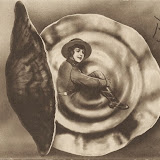
Polish couple Adorján von Wlássics (1893 - 1946) and Olga Spolarics (1896 - 1969) began the Manassé studio in Vienna during the 1920s and relocated to Berlin in the late 1930s. Maybe they tired of Pictorialist nudes early on because although the erotica is their best known work it is highly surreal; women in birdcages, crawling out of snail shells, trapped in bottles, pursued by giant beetles – you get the idea. Monika Faber published a book of the studio’s surrealist images, Divas and lovers: the erotic art of Studio Manassé, in 1998.


Ernst Schneider

If a single magazine represented Weimar Germany it was Berliner Zeitung Illustrirte. Not as experimental with graphics as its later rival AIZ (Arbeiter Illustrierte Zeitung) it was still the place to get your work seen and most photographers here had images appear in it, including Ernst Schneider. In 1908 he published The Human Form and Beauty: templates to study the naked human body, which as the title suggests was erotica wearing the thinnest gauze to disguise itself as art. It came out just after Heinrich Pudor published Nacktkultur in three volumes, which espoused the virtues of nudity, vegetarianism and racial purity. Historians can’t help but make the association between books like Schneider’s and the rise of Nazism. 


Martin Badekow (1896-1983)

These days a vintage print by Badekow will set you back a few hundred dollars but you can still buy a Ross real photo postcard for the price of a bus fare. Overlooked for a long time, his photographs from the Berlin cabarets have become emblematic images of Weimar Germany. Like Funk and Reiss he is frequently referred to in the press of the time as famous or world renowned yet post-war he disappeared from the radar. Today, with the increasing interest in fashion photography, it would be an oversight to leave him out of an exhibition.


Balázs Studio

Nothing can be found about this studio despite its work appearing frequently on Ross cards. Balázs is a common Hungarian surname and Berlin in the 1920s was full of émigrés from central and eastern Europe who had either escaped for political reasons or had moved to where the money and the ideas were. Considering how popular a lot of the actors were when they sat for the studio it must have had a good reputation, in a city full it seems of world class photographers.


WEIMAR PHOTO STUDIOS