And furthermore ...

One Man's Treasure encourages the use of anonymous photographs posted here to illustrate books and album covers.
If an image appeals to you, contact John Toohey at johntoohey@hotmail.com.
Showing posts with label Boxing. Show all posts

Tuesday, 10 July 2012

LES ANNÈES FOLLES

Five real photo postcards from France, 1910 to the 1920s

“In Paris everybody wants to be an actor; nobody is content to be a spectator.”
Jean Cocteau


It’s 1919. The war is over, the economy is crawling back, a vast array of amusements such as cinema, cameras and especially cars have become accessible to just about everyone. It’s time for a holiday, so where do you go? New York, capital city of the 20th century, or Paris, where people in the know swear the real action is. Between 1920 and 1925 some 300 000 Americans moved across the Atlantic. Paris was cheap and it made the U.S look as much fun as afternoon tea with someone’s old, tired and prudish aunt: all those wild stories coming out of music halls like the Folies Bergère were enough to make any civilized adult pack their bags. The stranger thing is that while Americans thought of Paris as the centre of all that was risqué and challenging, they could see a contortionist pull off the same feat as the woman above for a couple of pennies at any small town fairground. She probably performed under a French name and had an invented background that included stints at the major Paris theatres. What she lacked was glamour. No idea who this woman is though she looks tough enough to handle Paris and America’s mid west carnival scene without a blush.


Read some books about Paris in the 1920s and you could be forgiven for thinking the city was inhabited only by a half dozen Americans on the cusp of fame and a handful of poor and dissolute European artists. Easy to forget too that during his period in Paris, Hemingway was an unknown or that Joyce didn’t need all of his fingers to count the people who read Ulysses. Much more famous and more emblematic of Paris was Georges Carpentier, war hero, world light heavyweight champion, and singer, dancer and actor with a straw boater and cane. Maybe Hemingway could write a better sentence but Georges had his measure in all the arenas of his imagination so it’s a good thing they never became friends. It wouldn’t have lasted. The point about Carpentier was that he could not only punch a man’s lights out but he knew – at least this was the impression - the right wine to go with the cheese. That was a no-no in America where a man could do one or the other but ability in both was suspect. Maybe that was why so many Americans worshipped Carpentier. He represented something that was missing back home.


It took guts to face Jack Dempsey in the ring, but was that more terrifying than crossing the English Channel in a flimsy wooden aeroplane>Flying at 72 kph, which was, we shouldn’t forget, extremely fast for that time, Louis Blériot made the crossing in just over half an hour on the 25th of July that year and became an international hero. Actually, his most enduring achievement was the development of the monoplane but his design for the wing warping would send him into court against one of America’s most enthusiastic litigants, Wilbur Wright. As with most of his cases, Wright would lose – well, technically he’d win but most countries ignored the judgement – though he held up development of Blériot’s designs for a couple of years. In the meantime the French could continue celebrating Blériot’s groundbreaking (if that’s the word) flight with postcards like this, which is an excellent example of photomontage.


A flâneur wandered the streets without any apparent aim but a true boulevardier didn’t travel so far; from the office to the bistro and then maybe another bistro. Boulevardiers needed a job but it was as important to look like they didn’t. Sitting at a café, one didn’t glance at a watch and exclaim that one had been required back at the office ten minutes ago. Rather, one assumed that late was late so ten minutes was no different to one hour. Besides, that lunch extending through the afternoon could be centred on important business. It was necessary to be seen, after all, back in the office you were hidden from the world, as anonymous as the lowest clerk. A J Liebling returned from Paris in 1927 and became one of New York’s celebrated boulevardiers; strolling along Broadway was business as he picked up stories and tips for his New Yorker articles. Back in their natural home, boulevardiers were about to lose their aura of respectability. In the 1930s well dressed idleness was a bad sign.


Of course the French didn’t invent sex but they made it funny, or – let’s be really accurate here – they were funnier about prurience than the English, for whom most jokes seemed to involve keyholes, spying and red faces. If the Americans made a single memorable joke about sex it has been forgotten, although we have to bear in mind that the various committees protecting morals were particularly strong in American cities so it could well have been put to the torch as well. The Dupont Emera studio in Paris photographed a lot of theatrical performers and this is probably an example. You can imagine the kind of play – a drawing room comedy centred on a group of over-sexed characters whose attempts at requiting their passions were thwarted by various accidents. It was French so there was a veneer of sophistication and a bit less of the English sniggering. The audience left agreeing their francs weren’t entirely wasted and caught the Paris Metro home, by which time they had just about forgotten the play. But so what? Theatre, like photography, was never meant to be taken that seriously.

LES ANNEES FOLLES

Friday, 25 May 2012

EUROPEAN SON


Ross Verlag glamour portraits of men

“What is fame? The advantage of being known by people of whom you yourself know nothing, and for whom you care as little.”
Lord Byron


When Rudolph Valentino died in August 1926 Hollywood film producers threw tizzy fits trying to find a replacement, unaware that in death Valentino would create a whole new marketing sideline for them. Ivan Mozzhukhin (his name gets numerous spellings) was just one actor promoted as the heir apparent. He had everything the producers were looking for, an exotic European background – born in Russia, he had left in 1918 – dark, good looks and a vibrant presence in front of the camera. For unknown reasons, possibly personal, he was passed over and he barely made an impression in America. Probably for the best so far as the film studios were concerned. Sound was coming in and Hollywood was no place for an actor with a thick Russian accent. And just as well for Mozzhukhin too. When the studios wanted another Valentino they wanted another cardboard cut out, someone who knew how to smoulder and bat his eyelids in the right scenes. Mozzhukhin was better than that. In Russia and France he was a character actor, adept at playing admirals, peasants and insane monks with equal vividness. Hollywood would have wasted his talent.
One of his most famous roles was as the model for Lev Kuleshov’s eponymous effect, which was supposed to demonstrate how editing could invoke a response in the audience. In the demonstrations Mozzhukhin stared blankly at the camera as the scene suddenly cut to a bowl of soup, a coffin and then a beautiful girl. Each time the film returned to his face (it was exactly the same piece of footage) the audience read hunger, lust or tragedy in his face. It may have worked then, it doesn’t now.


This portrait of Nils Asther meets certain impressions we have of Scandinavian cinema; slow and quiet with lots of scenes involving healthy outdoor living. If you have watched the 1922 Danish/Swedish film, Haxan, witchcraft through the ages, (or part of it. Sitting through a full length silent feature is a test of inner strength these days.) you will know the Scandinavians had another side. This, after all, was the land of Munch, Hans Christian Andersen and Ibsen; people were familiar with the darkness.
Asther only acted in a few films in Denmark before moving to Hollywood. That may have been a mistake. For sure, in the 1920s no one considered Denmark the centre of anything much but in Hollywood he was just another face. Nothing stands out in his filmography though a few titles give an idea of his status: Laugh Clown Laugh, Abdul the Damned, Sweater Girl, Night Monster. Seven years after he died in 1981 his autobiography was published in Swedish. The critics were mostly kind to Narrens väg - The Road of the Jester – but in the way they might be to an injured street cat hanging around a rubbish bin. Asther spared no details, or names, in retelling his sexual history with men and women. He was evidently bitter about his lack of recognition yet anyone could see he had been master of his own destiny in that regard. One critic wondered if he was not a little mad.


 You tend to assume that any Austrian man who died in mid life in 1941 met a sticky end and since Rolf Randolf has now slipped into near total obscurity the question hangs without much hope of an answer. He began working in cinema during the First World War, when it was still expected that a man should write, direct, produce and act in his own films. That notion passed in the 1920s with the rise of studios around the world yet Randolf appears to have carried on regardless. He was still an independent moving between job descriptions in the 1930s. Though none of his films have memorable titles, the clips that survive on YouTube remind us that he came from the same world as Fritz Lang and Billy Wilder. He was at least competent at melodramatic thrillers. If that sounds patronizing it’s only because information is so scarce we can’t say much more.
This portrait was taken in the late 1920s or early 1930s. Something about his poise suggests he has already moved from in front of the camera to behind it, where the real power and influence lay in film-making. So how did he go out? Gunned down in an apartment courtyard by a gang of Gestapo operatives? Hacking his lungs out in a sanatorium? Mysteriously, his name does not appear in any cemetery records, even under his birth name, Rudolf Zanbauer.


 Speaking of Fritz Lang, he directed three of the five great films of German expressionist cinema; Metropolis, Dr Mabuse and Die Nibelungen. Paul Richter starred in the last two. That ought to have been enough to secure him some kind of lasting fame, after all, Valentino won a certain immortality with a handful of lesser films, but Richter, it appears, had little interest in stardom. Born in Austria, he was quite happy wandering through the Alps with a rucksack on his back and a yodel in his throat. He was also quite happy taking roles in small films that involved mountaineering and turned down others that would have secured his place in the firmament. The massive Die Nibelungen is his most famous role. It was also – no surprises here – one of Hitler’s favourite films, but Richter can’t be blamed for that. In this portrait Richter looks like a gay man who has made love to hundreds of women, not a huge contradiction in America, where it was assumed any well dressed European was obviously a touch low in the red blood cells but still a threat to the ladies. The portrait is by Mario von Bucovich, well known in the 1920s and 30s as a witness to Berlin’s less pedestrian areas.  


 In the mid 1930s Willy Fritsch joined the Nazi Party. No doubt he thought this a wise move guaranteeing he could still make movies, but plenty of others, including his frequent co-star Lilian Harvey, continued to work while showing no affiliation with the party, indeed quietly but actively resisting it. The odd thing is that after the war Fritsch’s past appears to have had no effect on his career. Others broke down and confessed that their mothers made them join or one had no choice or (best of all) they had no idea what was going on. Some paid the price for collaboration and never dared appear before a camera again. Not Fritsch, who went on working into the 1960s. It was said of Fritsch that he could do two things well. One was dance and the other was smile. Perhaps that was the secret. People didn’t take him seriously enough to consider him a danger during and after the Nazi era. In the same way he could have owed his incredible popularity before the war to his offering light entertainment with nothing intellectually threatening behind it. The silent films he appeared in during the 1920s and the musicals in the 1930s tended to have lavish sets, spectacular choreography and wafer thin plots, often based on the idea that a young woman is tempted to sin, sees the error in her ways and everybody celebrates when she marries her true love. Besides dancing skills and a winning smile, Fritsch also possessed keen survival instincts.


 So, did Gustav Fröhlich slap Josef Goebbels after his girlfriend, Lida Baarova, ran off with the Minister for Propaganda? You’d think no one could do that and live; then again Goebbels could have smugly employed a little eastern philosophy and allowed the actor to demonstrate his loss, hence his inferiority. You have to wonder though; how could Fröhlich get that close to Goebbels in private? After all, if there were witnesses, today we would remember him as the man who slapped Goebbels and lived rather than the leading actor in one great film, Metropolis, and numerous Fritsch type light comedies. There is something faintly convenient about this tale. So far as we know, Fröhlich didn’t do a Fritsch and join the party but he would have had to explain how he did quite well during the Nazi era without some level of patronage. The story that he once slapped Goebbels would have been enough to override a lot of difficult questions.
After a devastating war people tend to concentrate on the future and new beginnings but they also hold a candle for the world as it was before. With so many artists dead, disgraced or living abroad, Fröhlich (Fritsch too) was a link to a glorious past when German cinema was like no other, and so he would go on to a long yet strangely inconsequential career as an actor. 


 Put yourself in Max Schmeling’s shoes, if you can. It is June 22, 1938 and you are standing in a boxing ring in New York’s Yankee Stadium. There are 70 000 spectators on hand, most, by which I mean practically every single one of them, is screaming for your blood. When your opponent, Joe Louis, enters the ring the roar of the crowd is ear splitting. The handful of people who want you to win do so for the wrong reasons; to see a black man get his comeuppance or a demonstration of Nazi superiority. You are naked except for a pair of shorts, boots and gloves. The robe you wore into the ring is still flecked with spit and rubbish. You go to the centre to touch gloves with Louis, return and wait for the first bell. What can you do? Emotionally and psychologically you are already beaten.
The Americans never loved Schmeling. A couple of years earlier he had not only beaten Louis but knocked him out yet worse, in 1930 he won the Heavyweight Championship on a foul, when Jack Sharkey low-blowed him. Legally Schmeling was in the right though the Americans hardly thought it a manly or noble way to become champion. In Germany however he represented a ray of hope. With a broken empire and a ruined economy, the nation had few people to look up to, except Max Schmeling. Artists and intellectuals turned him into a folk hero, the struggle of national pride epitomised in physical power. Ross Verlag published this photo in 1935 or 36, when Schmeling was no longer champion but still a contender. He has been given the film star treatment, you wouldn’t know he was a fighter by trade, but then he was moving in social circles that generally disdained boxing. Around this time he married the actress Anny Ondra and they remained together for more than fifty years. After the war he bought into the German Coca Cola franchise and became a wealthy businessman, dying in 2005 at 99 years old. He once pointed out that losing to Louis by a first round knockout was the best thing that could have happened. If he had won he would have returned to a hero’s welcome from Hitler. Instead the Nazis decided he was washed up and left him alone.


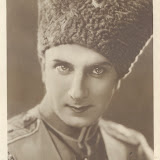
 “Every man has two countries; his own and France.” It was a French playwright, Henri de Bornier, who came up with that line so you can hardly consider it profound, balanced or even logical, but you probably get its idea. For a long time any English or American who wanted culture or sophistication looked to France for advice. It was naturally assumed that the French ate the best food, drank the best wine, wore the best clothes and lived in the best buildings. Georges Carpentier, Light heavyweight Champion from 1920 to 1922, understood the value in Bornier’s words. While the popular image of a prizefighter was as a sullen, barely literate denizen of the streets, Carpentier exuded gentlemanly charm and style. To the Americans he was as French as foie gras on a baguette, which was reason enough to love him, though before his celebrated fight with Jack Dempsey Hemingway correctly predicted that steely pragmatism would outpunch good living.
In this portrait published by Ross Verlag in 1925 and credited to the Atlantic Photo Agency in Berlin, Carpentier is given more worshipful attention than most film stars could ask for. Shooting from just below the eye line, the photographer puts Carpentier on a pedestal, seduced more by his glamour than his prowess as a boxer.

VIEW THE GALLERY HERE
EUROPEAN SON

Saturday, 3 December 2011

THE SWEET SCIENCE

Boxing photos from the wires

“To me, boxing is like a ballet, except there's no music, no choreography, and the dancers hit each other.”
Jack Handy


Isidoro Gastanaga, Dec 12, 1935
A glance at Isidoro Gastanega is enough to tell you he didn’t pick those muscles up in a gym; down a mine perhaps or on countless Spanish building sites but he has the look of a man who regarded roadwork and training as unnecessary gloss when the point of his trade was to knock another boxer flat. This portrait was taken in December 1935, a week before he was scheduled to fight up and coming contender Joe Louis in Havana. The fight didn’t place. When Louis’ manager, Mike Jacobs flew to Havana to settle final details he was met by six armed men, promptly turned around and caught the next flight back to New York.
Gastanega’s professional boxing career was as patchy as a crash victim in a hospital bed. He beat better men under suspicious circumstances and some of his fights ended in ways that left a distinct odour in the arena. Purses were withheld and investigations undertaken by boxing commissions, but those organizations existed essentially to see the gamblers and fixers maintained a veneer of respectability and their inquiries had a way of quietly fizzling out when no firm evidence of anything came to light. Gastanega’s death was also murky and unresolved. On the night of April 2, 1944, he was leaving a saloon in the Argentine border town of La Quica when a gunman fired off three bullets into him.   


     Tony Galento, 26/6/1938
Eight years on from the Gastanega non-event, Joe Louis had been the champion for six years and Tony Galento was the next tomato can in the so called “bum of the month” campaign. (You may hate boxing but you have to love its language.) “Two Ton” Tony trained on hot dogs and beer and the morning of the match pointed out to reporters that the proof he was taking things seriously was that he hadn’t had a drink for two days. Watching Galento on YouTube is a revelation in brute logic. Short and fat, he waddled around the ring with his mouth wide open, taking wild swings at opponents who sometimes had the wit to realize that if they only stayed out of danger for another round he’d be out of breath and theirs for the taking. Quite a few didn’t. It may appear astonishing that Galento had actually considered contender material but this photo provides the evidence why. Galento wasn’t a fighter; he was a showman. He bore a resemblance to Bud Abbott and shared his street instincts for timing and hype. This is a great image of a man who knows the odds are against his winning but the glory is in the paycheck and the secret is to get the press to eat out of his hand.


Joe Louis v Tony Galento, 26/6/1938
And here’s the result. It’s the fourth round and Galento has been effortlessly picked apart and punched about by a professional with surgical skills. Well, not entirely effortlessly since in the first round Galento connected and put Louis down for a brief count. Louis was heavyweight champion for twelve years and more than half a century on people may not know the facts or the statistics but they still recognize his name. Here he looks relaxed and unfazed, as though Galento might have fallen over before the fight actually started and he has popped over to lend the referee a hand. This bout marked the high point for Galento’s career, the one he would be remembered for. Later he would appear in a few films (a bit part in On the Waterfront), but he continued to fight, wrestling a reputedly dead alligator and a giant octopus and boxing a bear and a kangaroo. He died of a heart attack in 1979. Those in the press who remembered the 1940s mourned his passing, knowing they’d never get such great copy from a single character again.


Henry Armstrong v Lew Feldman, 30/3/1938
Physically, and somewhat in personality, Galento also resembled the photographer Weegee, both being masters of shameless self-promotion. Boxing photos of the 1940s and ‘50s are usually classified under ‘sport’ but they really belong to the genre of tabloid photography that Weegee exemplified. They share the same graphic quality, particularly in the way the flash bulbs froze and isolated figures against stark black backgrounds, and the photographers operated in the same tribal milieu. The Jewish and the Italian kids battling each other in a small downtown arena was merely a sanctioned version of the violence wrought in the nearby alleyways. The best photographers understood the elemental fascination for the savagery they depicted. In this photograph Henry Armstrong, world featherweight, and lightweight and soon to be welterweight champion, is in the process of finishing off Lew Feldman in a non-contest bout. In a lot of photographs the ropes would get in the way of the action. Here they make it work by dividing it up. They separate the fighters from the reporters, gamblers and fans outside the ring, and from us. They are a reminder that whatever is going on inside their barriers, we are essentially voyeurs. It’s also the ropes that tell us it’s all over for Feldman. In the cramped and claustrophobic territory of the boxing ring he has nowhere to escape to anymore.


Henry Armstrong v Lou Ambers 22/8/1939
The most famous name among boxing photographers of the era was Charles Hoff, thanks largely to a book, The Fights (Chronicle Books, 1996) that rescued his photographs from the storage vaults of newspaper archives. Erecting two strobe flashes at the sides of the ring, Hoff could set the shutter of his Speed Graphic to 125th of a second but capture the action at around 1/20 000 to 1/30 000th of a second. This photo shows Armstrong landing low on Lou Ambers’ trunks. Though The Fights has a photo by Hoff of this bout, the one above is unaccredited so the best we can say is it looks like one of his. High speed flash records at speeds much faster than the eye registers and the results can be deceptive. At this moment Ambers appears to be slouching against the ropes and casually inviting Armstrong to hit low, or at least he looks not so concerned as he ought to. This is one of a few dozen low blows Armstrong would land that night but Ambers was a tough street kid and he’d take them if that gave him permission to land some of his own. He went on to win the decision.


Archie Moore v Joey Maxim, 27/1/1954
Finally, a photo that gets so much wrong yet one thing right. Archie Moore is 38. He has been fighting for around 20 years and in a few minutes he will be crowned world light heavyweight champion. Yet, at his moment of triumph, he is obscured by the referee’s voluminous backside, his opponent Joey Maxim is also hidden and the whole composition becomes a study in boot soles. Maybe the photographer was loading film at the wrong time and turned desperately in the hope of capturing something. What he got was the antithesis of the standard boxing photo, no tight framing and no sense of the significance of the moment. In 1954 a new light heavyweight champion was an international news event but here it is just another contest between two unknowns. It is also a reminder that just because boxing is a legitimate sport that doesn’t make it elegant. For photographers like Hoff the mark of a great photo was its grace, the symmetry of two figures locked in a fight and that eloquent space that existed between them. What they might be depicting was one man who had lost self control and was desperately trying to extricate himself from more bloody humiliation, or another being battered to an insensate standstill. Even in the most brutal of Hoff’s photos, when a fighter’s face is grotesquely distorted by a landing punch, the essential perfection of the image neuters the violence. There isn’t any pain in this image of Moore and Maxim but there is a clumsy banality that belies any idea of sporting excellence.


VIEW THE GALLERY HERE
BOXING