And furthermore ...

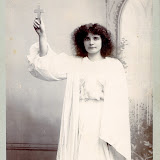
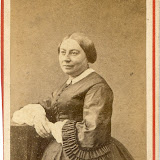
One Man's Treasure encourages the use of anonymous photographs posted here to illustrate books and album covers.
If an image appeals to you, contact John Toohey at johntoohey@hotmail.com.

Thursday, 1 April 2010

THE HISTORY OF WESTERN CIVILIZATION

A history of European civilization in cinema lobby cards

“What then is, generally speaking, the truth of history? A fable agreed upon.”
Napoleon Bonaparte

In the 115 years since its more or less official birth, the cinema has managed in to document almost every year of human history that preceded it. Almost, since there must be a few gaps but they are short and sparse. Professional historians have tried to uncover some poorly documented eras and given up. The cinema colours in the spaces they leave blank. The professionals can despair that cinema distorts the picture but they have lost that fight. Imagine an authentic film about our Neolithic ancestors, sitting under the shade of acacias for days on end, staring out across the plain, not doing a great deal then dying around the age of thirty. If we followed dictates that historical films had to accurately describe our knowledge of the times, Jesus would be short and swarthy, the crusades would involve years of peaceful interaction punctuated by outbreaks of violence, Columbus would most likely be a Spanish mercenary and quite a lot, really, quite a lot of our great heroes would share their beds with young boys.


Historians shouldn’t complain too much. The cinema has given them a lot of work. Every time Hollywood makes a historical epic with some lantern jawed American playing a 15th century explorer or a leader of a slave rebellion, the experts are called out to explain some facts. Actually, we like the discrepancies. They give us something to discover. Pushed to some basic research on a character from a film, we find out their motives are more complex and often less honourable than the film depicted. What’s more, our hero didn’t tower over his enemies. He was short, fat and bald, drank too much, was pushed around by his wife and probably had no foresight into the effect his actions would have.


One day someone will curate an exhibition showing the entire history of the world based upon stills from films. It will be massive, approximately 3 500 images in chronological order and it will be controversial. The Sioux will complain that Sitting Bull looks suspiciously white, the Turks will point out that their Ottoman ancestors did not wear Roman armour but these are details. We will not be looking at an actual history from which we can understand something about the past; quite the opposite. It will promote ludicrous fictions, suggesting the young women of ancient Babylon had enormous breasts, their fathers wore fake beards. Physically we will all look much the same, the Saracen guard as muscle-bound as the Comanche warrior, the New York bank clerk as thin and effete as the Chinese wise man. Women first appeared dark haired and cunning. Civilization not only softened their natures, it lightened their hair. 


The real achievement of the exhibition is that as we progress through we will be struck by how bizarre our ignorance is and when we leave, slightly exhausted by the size of the show, it will be the sense that no matter what disasters we have inflicted on ourselves, we’ve always looked good doing it. The photographs here, all lobby cards from the forties through to the seventies, are just a small sample of what will be on show.


THE HISTORY OF WESTERN CIVILIZATION

Monday, 29 March 2010

VICTORIAN GOTHIC

The image of the photographer in 19th century novels


“He throws no shadow, he make in the mirror no reflect.”
Bram Stoker, Dracula


“’Photography is one of my hobbies,’ said he. ‘I have made my dark room up there. But, dear me! what an observant young lady we have come upon. Who would have believed it? Who would have ever believed it?’ He spoke in a jesting tone, but there was no jest in his eyes as he looked at me. I read suspicion there and annoyance, but no jest.” 
Arthur Conan Doyle, The Adventure of the Copper Beeches


Near the beginning of Dracula, Jonathon Harker travels to Transylvania to finalise the transaction for the English manor house the Count has bought. Describing the house – Harker is a churchman but he speaks like a real estate agent – he admits he has not been inside Carfax but; ‘I have taken with my Kodak views of it from various points’.


Dracula was published in 1896, two years after the first Kodak pocket camera went on the market. The Count may have lived in medieval isolation but the other characters in the novel were up with the very latest in technology. Incidentally, for purists, the snapshots Harker produced would have been round if taken with an older model or rectangular if with the Pocket Kodak but either would have been not much bigger than a postage stamp.


The place photographers occupy in 19th century literature is curious given everybody was supposed to be excited by the new medium. In the last years of the century a few novels came out where a central character was a photographer but for the most part they have a minor role, and not an especially creditable one. They tended to be vapid obsessives or shady, as though they ran a sideline dealing smut.


Here is Jabez Wilson describing his assistant to Sherlock Holmes in The Red Headed League. “Never was such a fellow for photography. Snapping away with a camera when he ought to be improving his mind, and then diving down into the cellar like a rabbit into its hole to develop his pictures.”
And here is a conversation between Holmes and the King in A Scandal in Bohemia.
Holmes laughed. “It is quite a pretty little problem,” said he.
“But a very serious one to me,” returned the King reproachfully.
“Very, indeed. And what does she propose to do with the photograph?”
“To ruin me.”


That Holmes would mistrust photography is natural. He liked ephemeral clues; the hard stuff a photograph might provide interfered with his high minded faith in logic, but was all this a bit of projection on Conan Doyle’s part? It’s ironic that his characters speak of photography as either a petty hobby or a tool for sinister purposes. In 1917 he came close to ruining his reputation when he insisted the infamous photos of the Cottingley fairies were genuine.


The photographer in Nathaniel Hawthorne’s House of Seven Gables needs a proper job. “I dig, and hoe, and weed, in this black old earth, for the sake of refreshing myself with what little nature and simplicity may be left in it, after men have so long sown and reaped here. I turn up the earth by way of pastime. My sober occupation, so far as I have any, is with a lighter material. In short, I make pictures out of sunshine.”


The girl, Phoebe, is unimpressed. "A daguerreotype likeness, do you mean?" …. "I don't much like pictures of that sort—they are so hard and stern; besides dodging away from the eye, and trying to escape altogether. They are conscious of looking very unamiable, I suppose, and therefore hate to be seen."


The House of Seven Gables was published in 1851, by which time daguerreotypes had been on the market for over a decade. Phoebe is too young to remember the world before photography so her disdain for the medium is out of place. It’s like a ten year old today sniffing that the Internet has destroyed the art of letter writing, which may be true but how would she know?


Grant Allen is a forgotten writer, which is perhaps for the best. His stories involving drug taking religious sects, mummies roaming pyramids and time machines might sound good in synopsis but their strangled, purple prose makes for tough going. In 1891 he published a novel, Recalled to Life. Professor Vivian Callingham had invented an ‘acmegraph’, a camera with a sliding plate and electric light that took instantaneous sequences. The Professor specialized in chronophotographs of horses and athletes. Naturally, he harboured a terrible secret from his past. (His similarities to Eadweard Muybridge are not fortuitous.) In the opening paragraphs Callingham is found murdered, in a locked room. Fortunately there may have been a witness; unfortunately it was his daughter who is so traumatized by the event she immediately lapses into catatonic amnesia. Thereafter the story becomes lurid. Photographs are the key to the daughter’s recovery of memory; through snapshots of faces, buildings and landscapes from her past she eventually finds her reason, and her real father.


Although the book invoked some very modern scientific theories it’s whole tone is strangely reactionary. Modern technology is a dark force. Scientists are not to be trusted. That suggests one reason why Dracula has survived so well. It was a contemporary novel. The characters made good use of science and technology to battle the vampire. Among all the other themes involving sex and disease, the idea that science can save the world is in there. A camera in itself can’t defeat evil but the mindset that embraces it can.


The people in this gallery are characters from an unwritten gothic novel wherein evil, real or imagined, lurks under the surface.

VIEW THE GALLERY HERE

VICTORIAN GOTHIC

Wednesday, 24 March 2010

THE PHYSIOLOGY OF TASTE


Five portraits by Felix Nadar 1820 - 1910


The critics may say what they like about Zola, they cannot prevent us, my brother and myself, from being the John the Baptists of modern neurosis
Edmond and Jules Goncourt: The Goncourt Journals, Tuesday, April 23, 1878

March 21 marked the centenary of Felix Nadar’s death. 100 years is sufficient distance to ponder those questions that always niggle us when we consider a great man’s reputation. In Nadar’s case one is to wonder what the Goncourt brothers really thought of him.

Edmond and Jules Goncourt’s journals hang about the literature of Flaubert, Sand, Zola and Victor Hugo like an old aunt muttering caustic asides. Emma Bovary may have been the first ‘modern woman’ in literature but they knew her creator was an unsophisticated, syphilitic louche, which meant of course he fitted in well with Paris’s Bohemian culture and met with the brothers’ approval. Sand could be a cold lover but it was a position from which she could write about men with analytical detachment, and she did not wear men’s clothing so often as people assumed. Sarah Bernhardt looked like ‘a gaunt convalescent’. This one had flatulence, that one a diseased liver. Most of the writers, including Jules, were riddled with pox.


The brothers were not dilettantes in the sense the word was used in cultural circles at the time because they did write novels and plays but, in the way we use it now, they gave us the blueprint. Their journals are fawning and spiteful, conceited and plagued with neuroses. The Goncourts like to imagine their judgements were universal laws and whomever they deemed a genius was now vulnerable to their whims. It ought to be said that most everyone they did anoint as great is still considered so. They made dilettantism an art form in itself.

Between 1877 and 1879 Flaubert burnt a huge amount of his early correspondence. His justification was that he was doing it for the sake of posterity, but he should have realized that if future scholars wanted to learn about the author behind Madame Bovary they would have to resort to the Goncourts. With friends like that … Being artful gossips, the brothers didn’t lie, merely highlighted those details that appealed to them, which brings us to Nadar.


His portraits of Sand, Dumas, Flaubert etc perfectly complement the Goncourt journals because they also play with the idea of truth. Nadar knew how to make a sitter appear eminent. Someone who has never heard of Alphonse Daudet could study Nadar’s portrait of him and know he was an intellectual who must have had a significant reputation. He looks the part. Most of Nadar’s portraits are tightly framed; the head is all that matters. In his most famous portrait of George Sand he has drawn back. She is aloof and ironical, which is much how the brothers described her.

Nadar only earned two entries in the journals. The first was when, as a printer for the brothers, he livened up a party by inviting people in off the street. The second is really a reference to a woman Daudet ‘inherited’ from the photographer, a woman ‘drenched in absinthe’. In both cases Nadar behaved exactly as the brothers demanded one from their circle had to. (Falling in love was dull. One had to have mad affairs.) Still, he is very much a passing figure.

One reason might be he was essentially in competition with them. Like the brothers he willfully situated himself at the centre of events but this at a time when photography was usurping a role traditionally belonging to painting. A photograph took a matter of minutes to produce yet it could reveal much more about the sitter than a painting. And the brothers sweated over their words; Nadar simply pressed a shutter, or so it appeared.


The debate as to whether photography was art really only raged between critics. Painters by and large were actually open to the new medium. Turner collected daguerreotypes and Degas used photographs for his sittings. Few painters it seems described the new medium as a threat. Writers thought otherwise. It wasn’t just that Nadar could say so much with so little effort but he could also contradict the critics. The Goncourts devoted a lot of energy to degrading the people they most admired. Nadar put them on a pedestal. He was a presence at the same era as the brothers but, like blind men at a crime scene, they witnessed things differently.

The five portraits by Nadar are of unidentified French citizens. Though his portraits from Paris’ artistic milieu are his most famous, it is said that some 30 000 people sat for his camera. If all those portraits could be assembled that would create a singular record of Paris in the Second Empire. Words could not describe it.

VIEW THE GALLERY HERE
THE PHYSIOLOGY OF TASTE