And furthermore ...

One Man's Treasure encourages the use of anonymous photographs posted here to illustrate books and album covers.
If an image appeals to you, contact John Toohey at johntoohey@hotmail.com.
Showing posts with label marriage. Show all posts

Thursday, 2 October 2014

HORSE AND CARRIAGE

Wedding snapshots
“A man in love is incomplete until he is married. Then he is finished.”
Zsa Zsa Gabor


To be an army officer in Turkey in the 1940s and ‘50s gave a man more status than lawyers or doctors could expect. You might not have made more money but you were a defender of the nation, so when the time came to get married full military dress said more about you than any well-tailored suit could. It might have even been expected, since several of your commanding officers were obligatory guests and according to protocol you were not supposed to appear before them in civilian clothes. Having the groom in his military uniform does tend to add a slightly sinister quality to a wedding photo, but even if he were wearing standard black tie in this scene it would still suggest this wasn’t exactly the happiest day in a young couple’s life. Everyone, including the little boy in the left foreground, seems to regard the camera with suspicion, even hostility. It also looks like they have crammed into an office, or a back room at the registry. 


Ataturk made all Turkish marriages civil rites, meaning that religion was officially removed from the ceremony. The law still stands although people get around it by having two weddings, one official, one not, and so far as a lot of people are concerned it is the second that seals the compact. The first is just a piece of paper. You get an idea why from this scene. A crusty old clerk asks a few questions for formality’s sake before he hands over the documents to be signed. The couple look solemn and attentive, as befits the moment. The two men behind the couple are also looking at the camera with suspicion. The one in the hat bears an uncanny resemblance to an American gangster.


 But before we start thinking that the Turkish marriage is a dry, sombre affair, a farewell rather than a greeting, consider this snapshot. Apart from the fact that, finally, we get a smiling bride, there’s a suggestion the woman with her has donned a turban and applied some blackface. It’s the difference in shade between her face and her arm that make us think so, but could she? Would she? I don’t see why not. Weddings are usually supposed to be fun and it wouldn’t be the last time someone attempted to brighten proceedings with a display of bad taste. At least the bride is laughing. 


 Here we get a scene that suggests some ritual is about to take place. He appears to be a relative rather than the groom and it is possible he has decided to offer some prayers for the couple. Everything about the scene points to hasty improvisation; important details that were overlooked in the hectic rush of the last few days. He had a speech prepared but he left it at home, or thinking how quickly his daughter or his niece has grown up fills him with an existential dread. She wants him to know that everything will be all right, but actually, she’s used to his sudden spells. This is nothing, but she wishes her sister would put the camera down for once. 


 Let’s leave Turkey for a while and head to Canada, to contemplate for a moment how utterly boring it must be being a professional wedding photographer, heading out all day every weekend to take the same photos over and over. Professionals are paid to capture that special day but what they record is a formula. Only family and friends can photograph the day properly. Being the 1950s, this might have been taken at the bride’s home; which is to say her parents’. It’s a moment where past, present and future come together, for this being Canada in the 1950s she will probably have the same wallpaper in her new home, which will be a triumph of domestic taste and design. Mum would have taken the photo; Dad could have but he was in the kitchen knocking back his third bourbon of the morning, on account of nerves. 


 Another Canadian marriage scene; this one taken out in the rural wilds of Ontario. It makes you wonder why people hire professional photographers at all. A professional would have resisted photographing the couple with the farm as a background, preferring a studio setting with a neutral background, but the whole point of wedding photography is to preserve memories of the day. The only memory a commercial photograph would record is that of the experience of being photographed. Here we get an actual incident. The couple are already married and about to drive off for their honeymoon. They don’t look like a couple of farmers, but then women in wedding dresses seldom do. We can speculate on why they are out on the farm but we can’t deny this is a moment that will stay with them. 


 To England, and a photo that looks like someone’s attempt to create the studio look, with the blanket draped over as a backdrop. Everything about the scene is slightly ratty, from the man’s ill-fitting suit to the cheap blanket and the dingy doorway. They probably couldn’t afford a professional photographer, but they didn’t need one. We do hope he’s not a proper Jack the Lad, with a spare bird out in Chelmsford and a couple of geezers on his back for some readies he promised to cough up last week;  that would break her heart.


 Back to Turkey, and a moment that doesn’t look like one the bride would have wanted preserved, but then the other great thing about amateur wedding photographs is the haphazard ways they come together. Not much left to say about this one; it speaks for itself.


Another Turkish snapshot, that also looks like it was taken at the registry office. Notice how the bride and the woman to her right have their eyes shut against the flash. The boy next to the bride has covered his eyes. But then the woman next to him and the one above her have expressions of stark terror. The man just behind the bride has an inane grin. Others are trying to push into the photo or preserve their dignity. The man at the far left looks like he has just realized he left the stove on at home. Think of those millions of photos of everyone standing to attention on the church steps. This one is what a wedding photo should look like. 


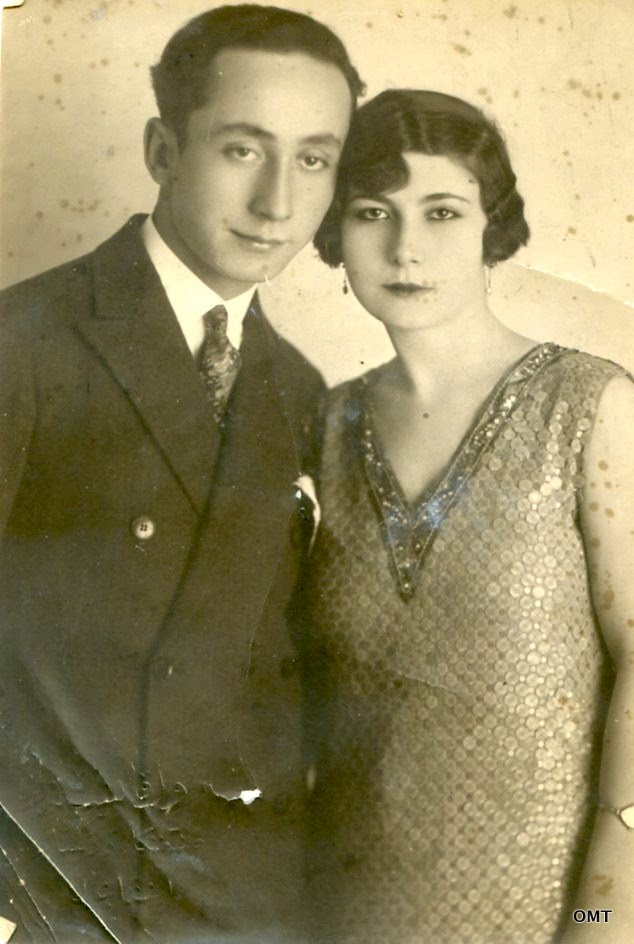
 Apart from making marriage a civil ceremony, the Ataturk government tried to outlaw polygamy and arranged and consanguineous marriages, but these were rooted in long traditions and out in the hinterland people stuck to them. This photo was taken in the 1920s, not long after the birth of the Republic and it presents the image of contemporary Turkish society, or what it should have been: an urbane couple without a hint of religious symbolism in sight. The woman’s headdress suggests she is Armenian, so here we encounter one of the conundrums at the heart of Ataturk’s revolution. With outwardly western values, better connections with Europe, a higher level of education and, in urban centres, more prosperity, on the surface the Armenian community embodied the new ideal, but how could that be so much as suggested after 1915? Compare it to the top photo and we see how it is one thing to adopt the manners, quite another to accept the mores.
LOVE AND MARRIAGE

Friday, 7 March 2014

CARRY ON ENGLAND


Postcards from the Bamforth Company
 “A dirty joke is not, of course, a serious attack on morality but …  a sort of mental rebellion.”
George Orwell; The Art of Donald McGill.


 Horrid marriages, drunkenness, cross-dressing, vomiting: what we call the English sense of humour. The Bamforth Company is, (or was: as of only recent times it no longer exists) famous for its ‘saucy’ seaside postcards. From the 1940s onwards they invariably featured a guileless girl with huge breasts and a middle-aged man terrified of sex. Before the drawn cards came out however, around 1903 Yorkshire photographer James Bamforth began producing real photo postcards that were described as comic but they were stranger than that. 

 
 Bamforth was born in 1842 in Holmfirth, a small mill town in the Pennines, and started his artistic career producing lantern slides for public lectures. Most of these lectures were of a religious or temperance bent, what we imagine went hand in hand with a dour, severe outlook on life. The Oxford Dictionary of National Biography describes him as a ‘staunch conservative’ (Conservatives are always described as ‘staunch’) and a supporter of tariff reform, which identified him as a man thoroughly opposed to foreign imports. To think that way in the 1880s meant you backed the Empire to the hilt and liberal ‘laissez-faire’ economics – what today we call the ‘free-market’ – would be the downfall of Britain. Naturally, Socialism, trade unions and suffragettes were also threats to economic stability. 

 
He is most famous as a pioneer of cinema. One of the curious things about Britain’s early cinema is how Yorkshire became a centre for all the innovative work. London scarcely features in the story; the real pioneers were often out in small industrial towns and they were likely to be engineers rather than artists or photographers. Bamforth was a commercial painter and it was that skill he brought to lantern slides, creating elaborate sets that were built outdoors and where members of his family and friends acted in tableaux of biblical scenes. By 1898, only three years after the Lumiere brothers showed their first film, he was producing cinematic shorts. Bamforth is sometimes credited with being the first to use the editing technique of cutting away mid-scene to show a bystander’s expression. The humour is slapstick, more interesting historically than for their content, and some can be found on YouTube by searching for Bamforth.


The cinematic influence is all over these cards. The scenes are dynamic and a lot were photographed as though they were stills from films. Bamforth was also a pioneer of the song card. Parlour songs, which as the same suggests were meant to be sung together in a drawing room while someone hammered at the piano, became popular in the mid 1850s. The lyrics are usually trite and sentimental but they are a gold mine for social historians looking for attitudes to everything from drink to adultery and death. Bamforth’s idea was to print out each verse on a card with an accompanying photo. This was smart. Not only would people buy three cards instead of one, the photos encouraged them to collect sets and because they were postcards customers could mail them around the world. 


Here we have a fairly moderate example of Bamforth humour set in a shop selling song sheets. Of course everything in the scene is constructed but given no one buys song sheets anymore, we get an idea of what the business was like when people would wait for the latest hit to make its appearance as a score with lyrics. In the early 1900s Francis, Day and Hunter was the largest music publisher in Britain. In a few years it would join up with the American publisher T. B. Harms and in the 1920s the U.S Justice Department’s anti-trust department would sue them because they controlled over 80% of the music publishing market and threatened to monopolize it. 


Bamforth postcards are also a mine for social historians, though it can take a bit of searching to realize it. Today “passive resistance” is just one form of political action open to us and often Ghandi is erroneously credited with the idea. In 1900s Britain, a passive resister distinctly meant either a suffragette or a trade unionist who used the tactic of chaining themselves to fences. Anyone looking at this card then would have got that connection at once.


The Art of Donald McGill was an essay George Orwell wrote in 1941 where he took the seaside postcard artist’s work seriously as an insight into English character. (No self-respecting art critic would have gone near the stuff.) McGill, who counted the Bamforth Company as one of his publishers, started out producing drawn scenes with, to us, tame double entendres but by the Second World War his cards featured anatomically incredible women and blatant innuendos. Reading Orwell’s essay, especially when he provides a breakdown of the types of jokes, you could run a pencil through McGill and add Bamforth. “Marriage only benefits the woman”; check. “Sex appeal vanishes at about the age of twenty five”; check. “There is no such thing as a happy marriage”; check. “Drunkenness is something peculiar to middle aged men; check. Policemen are fools, lawyers sharks and women rule the home. We could add a couple more. Work is something working class men go out of their way to avoid, and wealthy men are either sinister or stupid. Orwell points out that McGill’s cards aren’t “intended as pornography but, a subtler thing, as a skit on pornography … Caricatures of the English man’s secret ideal, not portraits of it”. His essay incidentally appeared roughly midway between the last Bamforth photo cards and the high point of the Carry On films in the 1960s. Obviously, British society didn’t evolve; it just grew older. 


One subject McGill never broached but was a staple of Bamforth cards was childhood. When it comes to poverty and death especially, we’re not just looking at a lost world but an utterly foreign one as well. The syrupy mawkishness seems macabre today and if it’s easy to say that the infant mortality rate was high enough to create a kind of inurement to death, it’s worth remembering that in the 1850s the rate in some industrial towns was in the vicinity of one in three children dying before their first birthday but by the turn of the century that had improved dramatically. These cards aren’t a social comment on England. Rather, they reflect a particularly stern religious view. It wasn’t for children to question God’s will but accept whatever he dished out with gratitude.


This card seems almost ghoulish. The lines are from The Better Land by Felicia Hemans. She was a friend of Wordsworth and Walter Scott and apparently a popular poet in her day. The Better Land was one of her best known though these lines are enough to suggest it is also best forgotten. Imagine telling a five year old on her sick bed not to worry because she’ll soon be in a better place. And yes, young as she is, the girl in this photo knows enough to recognize a maniac when she sees one. 


This one on the other hand may have originated as a lantern slide for one of Bamforth’s lectures. There are records of this poem appearing on a series of lantern slides. Get the last line. Mother is dead and “make father love us more than gin and beer”. How sad. This, in a nutshell, is what the temperance movement started off being about. Mothers were dying in childbirth and fathers did turn to drink and neglect their children. It didn’t take advanced mathematics to see the connection between the number of children on the streets and in workhouses and the social erosion brought on by alcohol, but the logic was askew. Drink wasn’t the real devil. In a world of rigid social stratification, where basic hygiene let alone healthcare was denied to the poor, of course mothers died and fathers found the pressure too much to bear. The real problem with the temperance movement wasn’t that it was a collection of prudes and wowsers but their understanding and solutions to social problems were so simplistic they could only perpetuate the situation. Amazingly, there are still people who believe that if we only gave up drinking and listened to Jesus we wouldn’t need government funded health care.   
  

But enough of suffering children. Bamforth’s postcards really come into their own when they turn to the subject of marriage. Orwell pointed out that at the heart of McGill’s images was the absolute faith in marriage as the most important and exciting thing that could happen to a person, which was why he (McGill, but also Bamforth) could make such fun of it. But sometimes the original joke gets lost. This is one about the horrors of marriage, but I see two men. One of them is wearing women’s clothes and he’s about to shove an umbrella up the other’s bum. This isn’t just funny; it’s really weird. 


 And this one. Again the basic message is fairly explicit. He’s been hard at work cleaning the house and she has just come home. Note the role reversals. This might have carried a hidden warning about the danger the suffragettes posed. Give women the vote and before you know it they won’t just be running the household but the nation’s economy. Perhaps that was something to worry about back then, but the real question is; why is he holding a doll?

 
 Here we have a typical policeman. Instead of keeping the streets safe, he’s off in the park meeting his sweetheart. She’s a nanny. No doubt they have carefully planned this assignation. They probably keep to it every afternoon at 3:30. But look at the next card …

 
Isn’t this just a little grotesque? While the two natural forces of social responsibility, the policeman and the nanny, are off looking at the gardenias, the tramp has turned up; to do what exactly?


  Here’s another piece of strangeness. The man is clearly German; he wears that internationally recognized sign of the German, the monocle. This postcard is copyrighted 1907, too early for it to be war propaganda but it does show how much Germany was considered a threat even then. In 1903 Erskine Childers had published The Riddle of the Sands, a thriller based on the premise that war with Germany was imminent. Presumably Childers wasn’t the only one to think this at the time, hence it was acceptable to make fun of the Germans. Politically, Childers, an Irish republican, represented all that Bamforth abhorred. They differed on Germany as well. Childers thought the country was a threat; Bamforth thought it was a joke.  


The Bamforth Company took hundreds of photos and released millions of postcards on the world, which means they are commonplace, easy to find and still quite cheap, but look beyond the content, to the production of the images. Technically they are often brilliant; expertly staged, composed, lit, photographed and printed. The sets are often elaborate and though we see the same backgrounds appearing frequently, that doesn’t detract from them. Even this scene, which belongs more to religious kitsch than art photography, is still an artful production. Too many photo-historians looking at this era fuss over the old and tired question of Pictorialism V Modernism, as though that was all that was happening. Bamforth’s photo postcards are much more interesting than that.

CARRY ON ENGLAND

Friday, 10 August 2012

WEDDING BELLS


Wedding costumes from a 1930s Turkish studio
 “Culture is roughly anything we do and the monkeys don't.”
Lord Raglan


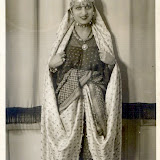
 These seven photographs are from the Rasim photo studio, about which I know nothing except that it was active in the 1930s. It could have been based in Istanbul but Ankara or Izmir would also be possible. Trying to track down information on studios is a worthy pursuit; you sometimes uncover interesting details but they can be irrelevant to the real story. In this case the women are modelling traditional wedding costumes, which might not sound so fascinating in itself except that during the 1930s Turkey was undergoing a radical cultural revolution. It was supposed to be a modern state with a western, secular outlook. Officially the traditional wedding and its elaborate rituals were frowned on. Layers of colourful embroidered silk and satin were out. A modern Turkish bride wore white and her husband sealed the marriage with a gold ring. So, what’s going on here?  


 Well, it probably isn’t that subversive. The Government passed some famous laws regarding headwear and others that made marriage a civil rather than a religious ceremony but it didn’t expressly forbid traditional costumes. At some point it had to balance its desire for western integration with the banal reality that most of its citizens were rural and weren’t going to discard tradition so quickly, and then there was the nationalist tension between cleaning out a failed system and protecting the Turkish identity. As long as the family kept within the law and had the marriage sanctioned by a government representative, the costume probably wasn’t an issue though, if a woman, or more exactly her parents, were modern citizens of the new republic she would wear white.


These could be actual wedding portraits but it is more likely they were intended to show off a range of traditional outfits available from a store or manufacturer; in other words they are fashion. It seems apparent that some of the women are professional models who know their poses. Also, the range of costumes on display is broad. Traditionally, wedding costumes were regional so a bride from the Black Sea region wore a specific design different to a woman from any other area. This regionalism isn’t always easy to distinguish. The pillbox hat and veil for example appears all over the place and every woman here wears baggy harem pants.


Likewise, each region supposedly had its own ceremonial traditions although a cursory glance suggests there wasn’t that much variation. The stories of wedding celebrations lasting 40 days are either exaggerated or belong to a time long before these photos were taken. Ceremonies tended to last three days during which time the bride remained secluded from the groom. Pampered by her female relatives and friends, the highlight was the henna night when all the women painted elaborate designs over the exposed parts of their bodies. The ritual of the wedding night exposing of the bedsheets to the crowd below appears to belong to the very east, where Arabic and Persian influences were strongest. An aunt was always on hand with a sachet of sheep’s blood in case there was a problem. Everything was done for appearance’ sake.


It’s just possible some of these women are modelling Jewish or Armenian costumes. Despite religious differences Jews and Armenians in the Ottoman Empire had absorbed so many traditions that in some cases no one can be certain what belonged to which culture. The costumes weren’t that different, at least to our eyes, the henna night was also practiced by Jews and Armenians and wedding feasts had a similar procedure and menu.


You will notice none of the women have their faces covered. This would have been one prohibition taken seriously by the government although it was and still might be practiced in isolated rural areas. It was also an Armenian and Jewish custom as demonstrated by some 19th century photographs. The white veil served the same function in western tradition, the idea being that the moment of marriage was when the woman revealed herself to her husband and the world. (You will notice too that some of the women appear to be wearing wedding rings. This custom didn’t appear among Muslim Turks until the emergence of the new republic when the other accoutrements of western marriage were taken on.) Another traditional custom that was outlawed was polygamy, even though, like arranged marriages, it was almost impossible to enforce, especially if it was conducted without ceremony but the approval of the village council. These photographs can be read as a compromise between emerging western and traditional Ottoman ideas. The dress is traditional, but not entirely, and the structure of the photographs follows western imagery. 


Which brings us to this, the photograph that expresses that dynamic most directly. The bride wears white, her maids traditional costumes. It isn’t going too far to say this image exemplifies official doctrine. The ceremony should obviously be western yet it ought to acknowledge Turkish culture. See how all the men in these photos wear standard black tie. To wear the traditional outfit of the groom or his best men would be difficult since by now the fez was outlawed yet it would have also defined them as country types, which is to say backward and poor. The women could do it because, even in the villages, their wedding costumes were intended to define them on their special day as glamorous beauties. Within a few years the traditional wedding costume would disappear entirely from the cities and almost everywhere else but isolated areas. In the last few years it has made something of a comeback, inspired by the revival of interest in Ottoman culture.


WEDDING BELLS

Sunday, 24 July 2011

SCENES FROM A MARRIAGE


The mystery of a married couple’s snapshots

 “The past is never dead, it is not even past.”
William Faulkner.


The photographs in this post are a perfect example of the paradox of using photography as social history, namely, the more evidence accumulated the more uncertain the proof. Originally it was three images taken at the Paris Colonial Exposition in 1931 that caught my eye, and then a few more showing the same couple in the box. Over the following months more turned up in other shops across Istanbul so it became a project accumulating as many as possible with the idea I was building up a picture of a marriage. But as photos emerged so did more questions, none with any answers. One photo showed the woman holding hands with a child about four or five. Was it hers? If so, why hadn’t he or she appeared in earlier photos? This wasn’t a case of discovering a skeleton in the closet so much as a jumble of bones in a museum’s crate and realizing some long departed curator had mislabelled them.


Why the photos turned up in so many shops was another of the mysteries. Clearly, they hadn’t been sold to one dealer as part of an estate. Possibly a descendant had unloaded them on the shops but it’s doubtful anyone would go to the effort of visiting so many stores and negotiating for what would have been a few lira at most. More likely they fell into the hands of an itinerant junk dealer who tried to get what he could.


There are now somewhere in the vicinity of a hundred photographs of this couple in the archive, and as the gallery indicates, there are ID, photo-booth and studio portraits mixed up with the snapshots. One small, intact album has photos of a man who is clearly the brother of the husband, and his wife living in Germany. The backs of the photos are stamped Frankenthal. Like the couple they were obviously well off and cultured. There are almost no handwritten notes on the backs of the photographs though a few have Ottoman script, suggesting they were Turkish citizens. Or at least the man was. There are a few of the woman with another woman who could be her mother and they appear to have been taken in France. It’s just a hunch but when I say they are Turkish citizens I mean they may be Armenians. It fits with the diaspora; a lot of Armenians left Turkey for Europe, then again there are a lot of hunches in this story.


It is obvious from the photographs that theirs was a happy marriage. The first photo in the gallery shows the two of them sitting in a garden. You will note that though they sit together she occupies a higher position. This may be a small point but in Turkish photos from the era it is more common for the man to stand behind and appear taller. In this shot there doesn’t appear to be any issues of ownership or dominance. Another detail is that the marriage is documented over at least a couple of decades. We watch the couple ageing together. The variety of types of photographs is also a good sign. They didn’t just take pictures of each other; they collected them.


Obviously (and speaking as a collector, this is a bit of a shame really) most people don’t make a point of recording the low points and moments of tension that are part of a marriage. What we get from any album is such a selective account it is almost fictional, in the sense anyway that we understand we are getting a highly edited version. Were we to take photo albums as any authoritative evidence of peoples’ lives we would be left with the conclusion that existence is a happy, quiet thing, a bit like a cat sleeping in the corner. 


At a point about the couple’s late forties the photos stop. It’s natural to speculate on the worst – death, divorce – but this is a common situation. There comes a stage when people step back from documenting their lives and the job falls to a son or daughter who are staring their own family and beginning the process again. Maybe it also has something to do with vanity; after a certain point what we are recording now is ourselves growing older. Perhaps the marriage reaches a plateau where we no longer need any evidence to substantiate it. That though implies that the act of photographing is a kind of neurosis where we can’t rely on memory alone as proof that something actually happened, an idea most of us would naturally resist. 


If these photos had been found intact in one album I would have considered them interesting though not necessarily special. That they were scattered about the city gives them their poignancy. At some point the record of two people’s love and marriage fell into the hands of somebody else for whom they were merely a bunch of old photos. Their dispersal became as effective an annihilation as tipping them into an incinerator. This raises another issue. By collecting the photos I was in effect perpetuating the memory of a marriage that meant nothing to me but in its way became important. Is that what we do when we collect old albums? Do we feel we have some responsibility to the dead? 


SCENES FROM A MARRIAGE